
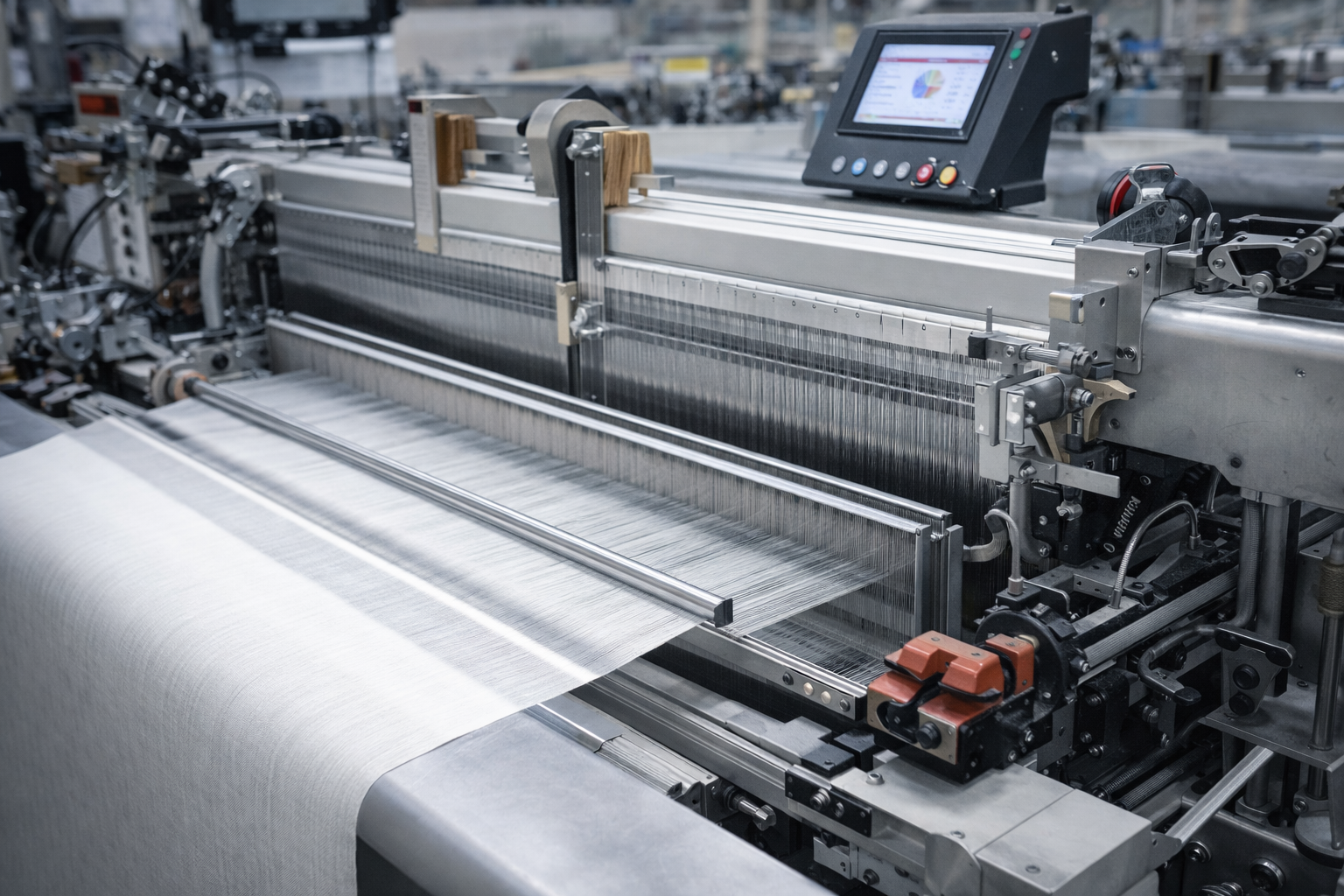
Flannel appears to be a simple fabric. Soft, matte, colorful. Precisely because of this, it is often forgotten how much technique and how many choices lie behind that single roll of fabric. Those who understand how flannel is made also understand why quality, weight, and behavior differ so much between seemingly comparable products.
This is the process, step by step.
From cotton to fiber
It all starts with cotton. Flannel for professional use is almost always made from cotton fibers, chosen for their length and purity.
Long fibers ensure:
– less lint
– a more even surface
– better durability with reuse
After harvesting, the cotton is cleaned and combed. Impurities are removed, and fibers are aligned. What remains is not "cotton wool," but a controlled raw material.
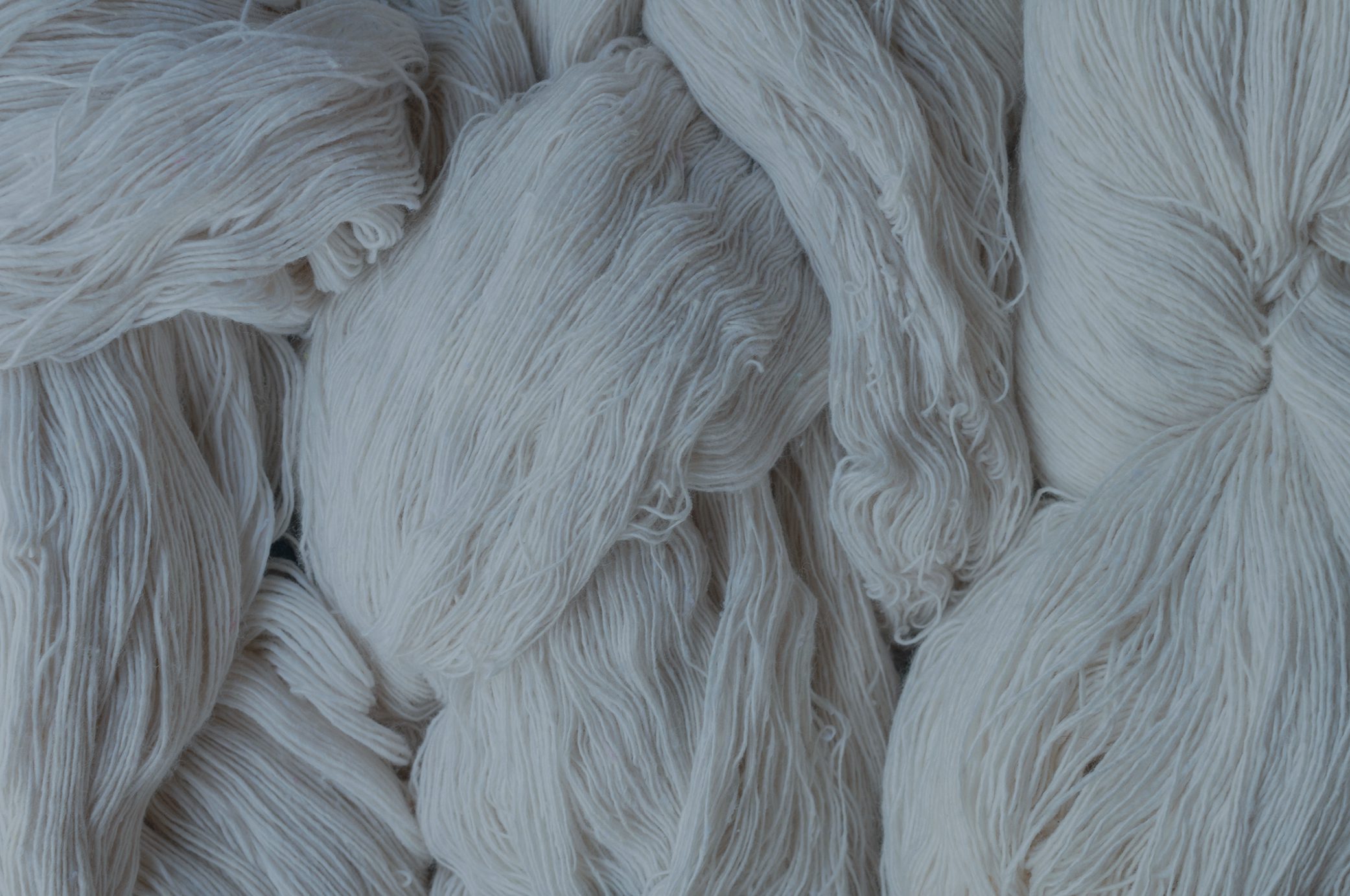
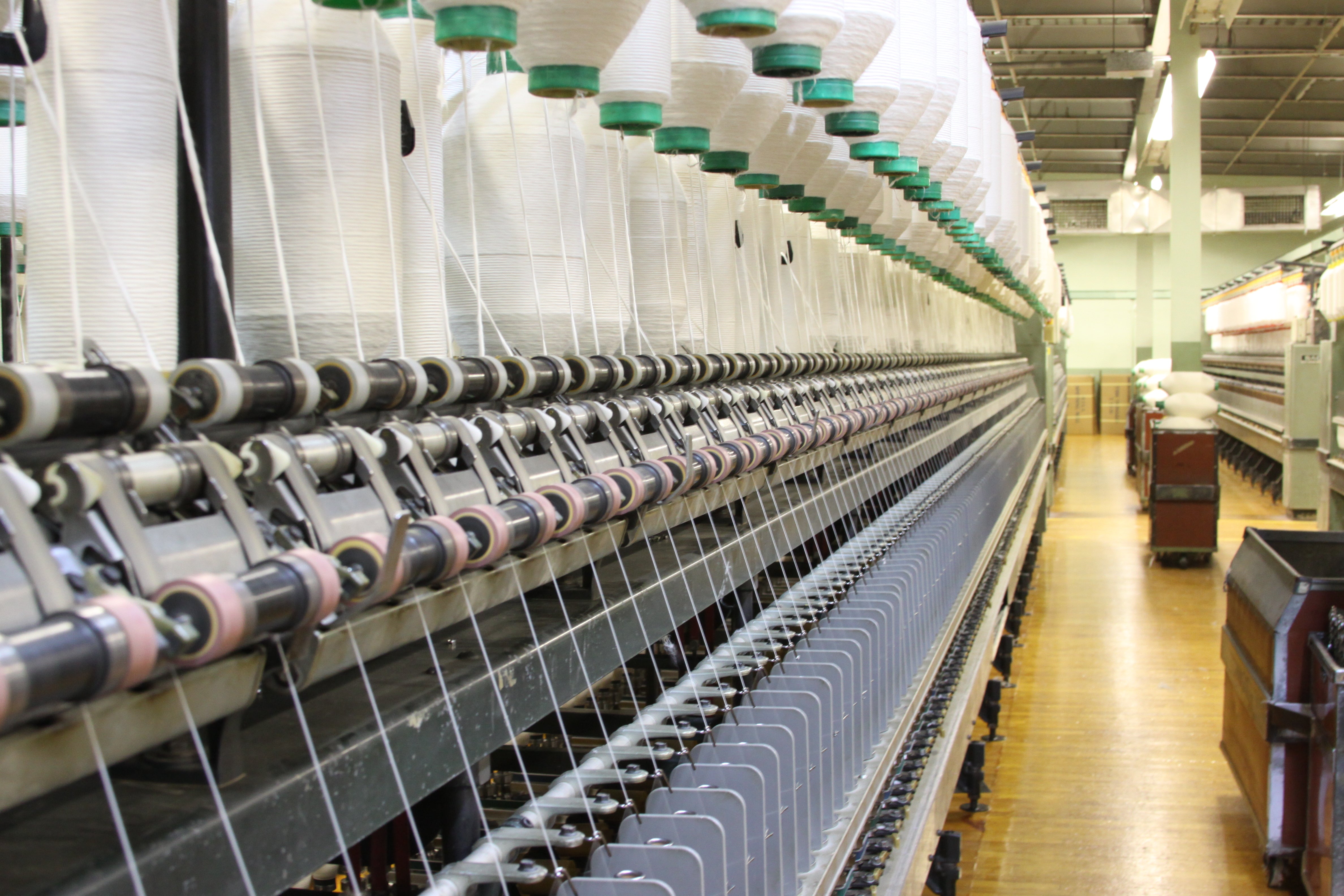
Spinning: from fiber to yarn
The cotton fibers are spun into yarn. This is a crucial step, as it lays the foundation for strength and density.
Important choices:
– yarn thickness
– tension during spinning
– degree of twist
More twist gives strength, less twist gives softness. Flannel is precisely in that tension field. Too loose and it pills, too tight and it loses its absorbent, matte character.

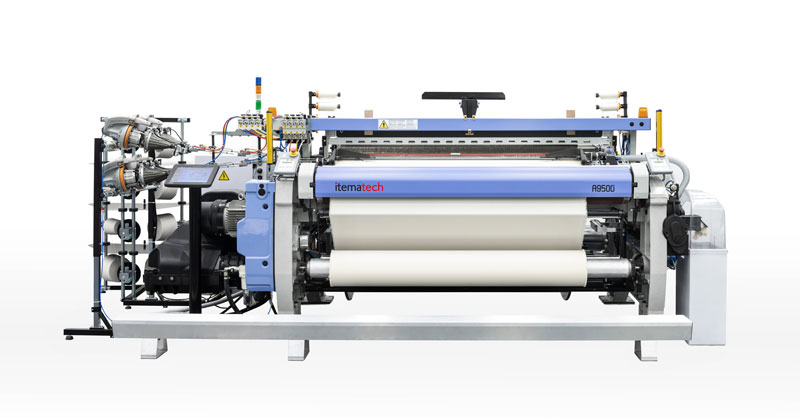
Weaving: structure above all
The spun yarn is woven into fabric. Usually in a simple weave, but with a high density.
This creates properties such as:
– light absorption
– tear resistance
– how "open" or "closed" the fabric feels
The weight (e.g., 140 or 165 g/m²) is largely determined here. Not by thickness alone, but by how much yarn is used per square meter.
Raising: the soft character of flannel
After weaving, the fabric is raised. Small fibers are pulled up with rotating brushes.
This provides:
– a soft surface
– additional light dampening
– better acoustic absorption
Too much raising makes the fabric fragile. Too little raising makes it hard and shiny. Here too, balance is everything.
Dyeing: color is chemistry and optics
Flannel is usually dyed as a woven piece: the fabric as a whole goes into the dye bath.
For professional flannel, it's about:
– colorfastness
– uniformity
– predictable behavior under light
Black is notorious. Two black flannels can appear identical under daylight and completely different under LED. That difference arises here, in the combination of pigment, fiber, and degree of raising.

Fire retardant treatment: necessary, but not obvious
For use in events and on stages, flannel must be flame retardant. This is done through a post-treatment.
Important to know:
– flame retardant ≠ fireproof
– treatment is washable
– it affects stiffness and lifespan
A good treatment slows down flame spread. A poor treatment is immediately noticeable: stiff, shiny, less absorbent.
Drying, checking, and cutting
After all treatments, the fabric is dried, checked for color and weight, and cut to length.
Decisions made here:
– roll or bale
– 30 or 60 meters
– packaging type
Packaging: the final technical step
The packaging determines how flannel arrives at the location.
Professional packaging means:
– tightly rolled
– protected against moisture
– minimal deformation